| Site actuel | Collection | Cote | Statut | Code à barres | |
|---|---|---|---|---|---|
| Bibliothèque Beyrouth Présentoirs-Libre accès | Achat | BEY-8°-12053 | Disponible | 1040449 |
Bibliographie pages 264-310. Notes bibliographiques. Index
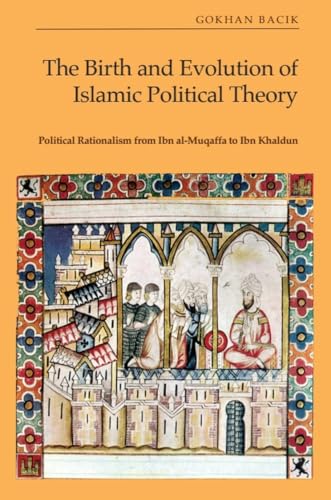
"Offers provocative re-readings of five political rationalists in Islamic political thought between the eighth and the fifteenth century. The literature on Islamic political thought utilises a methodology whose typical characteristic is the arbitrary use of religious, philosophical and political perspectives, as if the differences among them have no effect. This amounts to the theologizing or philosophizing of works of Islamic political theory - written as responses to social, economic and political dynamics - as if they were written as general theoretical formulations of religion or political philosophy. To overcome this problem, The Birth and Evolution of Islamic Political Theory first categorizes Islamic political thought as three distinct group categories: the religious view of politics, Islamic political philosophy, and Islamic political theory. In turn, Islamic political theory is defined as the intention to explain and justify politics by invoking social, economic, and political dynamics completely or partially independently of religious and philosophical norms. These dynamics are illustrated by the study of five political rationalists: Ibn al-Muqaffa, al-Mawardi, Nizam al-Mulk, Ibn Tufayl and Ibn Khaldun." éditeur
Introduction: What is Islamic political theory? Ibn al-Muqaffa: the birth of Islamic political theory Al-Mawardi: Islamic political theory in the provincial order Nizam al-Mulk: Islamic political theory in the Age of States Ibn Tufayl: political rationalism in an elitist order aIbn Khaldun: a proto-modern Islamic political theory Conclusion: Political rationalism from past to present