| Site actuel | Collection | Cote | Statut | Code à barres | |
|---|---|---|---|---|---|
| Bibliothèque Beyrouth Magasin | Achat | BEY-4°-5464 | Disponible | 1038537 |
Notes bibliographiques. Bibliographie en fin de contribution
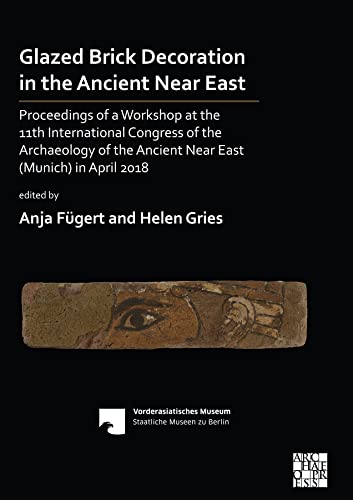
Glazed bricks applied as a new form of colourful and glossy architectural decor first started to appear in the early Iron Age on monumental buildings of the Ancient Near East. It surely impressed the spectators then as it does the museum visitors today. Glazed Brick Decoration in the Ancient Near East comprises the proceedings of a workshop held at the 11th International Congress of the Archaeology of the Ancient Near East (ICAANE) at Munich in April 2018, organised by the editors. Over the last decade excavations have supplied new evidence from glazed bricks that once decorated the facades of the Ancient Near East’s public buildings during the Iron Age (1000–539 BC) and especially significant progress has been achieved from revived work on glazed bricks excavated more than a century ago which today are kept in various museum collections worldwide. Since the latest summarising works on Ancient Near Eastern glazed architectural décors have been published several decades ago and in the meantime considerable insight into the subject has been gained, this volume aims to provide an updated overview of the development of glazed bricks and of the scientific research on the Iron Age glazes. Furthermore, it presents the on-going research on this topic and new insights into glazed bricks from Ashur, Nimrud, Khorsabad, and Babylon. 4e de couverture
Les briques émaillées appliquées comme nouvelle forme de décor architectural coloré et brillant ont commencé à apparaître au début de l'âge du fer sur les bâtiments monumentaux du Proche-Orient ancien. Ce décor a certainement impressionné les spectateurs d'alors comme elle impressionne les visiteurs de musée aujourd'hui. "Glazed Brick Decoration in the Ancient Near East" (La décoration en brique émaillée dans l'ancien Proche-Orient) est le compte rendu d'un atelier organisé par les éditeurs lors du 11e Congrès international d'archéologie du Proche-Orient ancien (ICAANE) à Munich en avril 2018. Au cours de la dernière décennie, les fouilles ont fourni de nouvelles preuves de l'existence de briques émaillées qui ornaient autrefois les façades des bâtiments publics du Proche-Orient antique durant l'âge du fer (1000-539 avant JC). Des progrès particulièrement importants ont été réalisés grâce à la reprise des recherches sur les briques émaillées fouillées il y a plus d'un siècle, qui sont aujourd'hui conservées dans diverses collections de musées dans le monde entier. Étant donné que les derniers travaux de synthèse sur les décors architecturaux vernissés du Proche-Orient ancien ont été publiés il y a plusieurs décennies et que, dans l'intervalle, on a acquis une connaissance considérable du sujet, ce volume vise à fournir un aperçu actualisé du développement des briques vernies et de la recherche scientifique sur les émaux de l'âge du fer. En outre, il présente les recherches en cours sur ce sujet et les nouvelles connaissances sur les briques émaillées d'Assour, de Nimrud, de Khorsabad et de Babylone. 4e de couverture
Foreword and Acknowledgements / Anja Fügert and Helen Gries Chapter 1 : ‘I had baked bricks glazed in lapis lazuli color’ ‒ A Brief History of Glazed Bricks in the Ancient Near East / Anja Fügert and Helen Gries Chapter 2 : Scientific Research on the Iron Age Glazes from Iran and Iraq : Past and Future / Parviz Holakooei Chapter 3 : The Reconstruction of the Glazed Brick Facades from Ashur in the Vorderasiatisches Museum, Berlin (GlAssur Project) / Anja Fügert and Helen Gries Chapter 4 : Glazed Bricks by the Dozens : A Khorsabad Jigsaw Reassembled at the Louvre / Ariane Thomas Chapter 5 : Glazed Tiles from Nimrud and the Visual Narrative of Esarhaddon’s Egyptian Campaign / Manuela Lehmann and Nigel Tallis Chapter 6: The Glazed Bricks that Ornamented Babylon ‒ A Short Overview / Olof Pedersén