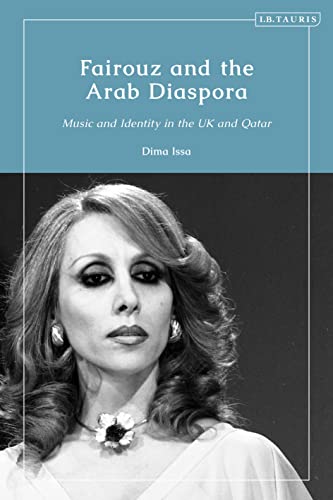
Image de couverture Amazon
Image d'Amazon.com
Fairouz and the Arab diaspora : music and identity in the UK and Qatar / Dima IssaAuteur principal: Issa, DimaLangue: anglais.Pays: GrandeBretagne (GB).Publication : London, New York, Oxford : I.B. Tauris, 2023Description : 1 vol. (xvi, 215 p.) : glossaire. ; 24 cmCollection : Middle EastISBN: 978-0-7556-4176-5.Résumé: With a discography of over 1000 songs, 20 musicals and three motion pictures, the Lebanese singer and performer, Fairouz, is an artist of pan-Arab appeal, who has connected with listeners from diverse backgrounds and geographies for over four often tumultuous decades. In this book, Dima Issa explores the role of Fairouz's music in creating a sense of Arab identity amidst changing political, economic context. Based on two years of research including 60 interviews, it takes an ethnographic approach, focussing on audience reception of Fairouz's music among the Arab diasporas of London and Doha. It shows that for discussants, talking about Fairouz meant discussing diasporic life, bringing to the surface notions of Arabness and authenticity, presence and absence, naturalization and citizenship, and the issue of gender..Bibliographie: Bibliogr. p. [201]-208. Index.Sujet - Nom de personne: Fayrūz, 1934- Sujet - Nom commun: Arabes Identité collective | Musique Grande-Bretagne | Musique Qatar
Type de document : Monographie Ce document apparaît dans la/les liste(s) : BEYROUTH-Acquisitions-2023-trimestre 3 | BEYROUTH-Acquisitions-2023
Exemplaires
Site actuel Collection Cote Statut Code à barres
Bibliothèque Beyrouth Magasin Achat BEY-8°-11756 Disponible 1039494

Bibliogr. p. [201]-208. Index

With a discography of over 1000 songs, 20 musicals and three motion pictures, the Lebanese singer and performer, Fairouz, is an artist of pan-Arab appeal, who has connected with listeners from diverse backgrounds and geographies for over four often tumultuous decades. In this book, Dima Issa explores the role of Fairouz's music in creating a sense of Arab identity amidst changing political, economic context. Based on two years of research including 60 interviews, it takes an ethnographic approach, focussing on audience reception of Fairouz's music among the Arab diasporas of London and Doha. It shows that for discussants, talking about Fairouz meant discussing diasporic life, bringing to the surface notions of Arabness and authenticity, presence and absence, naturalization and citizenship, and the issue of gender.

Partager